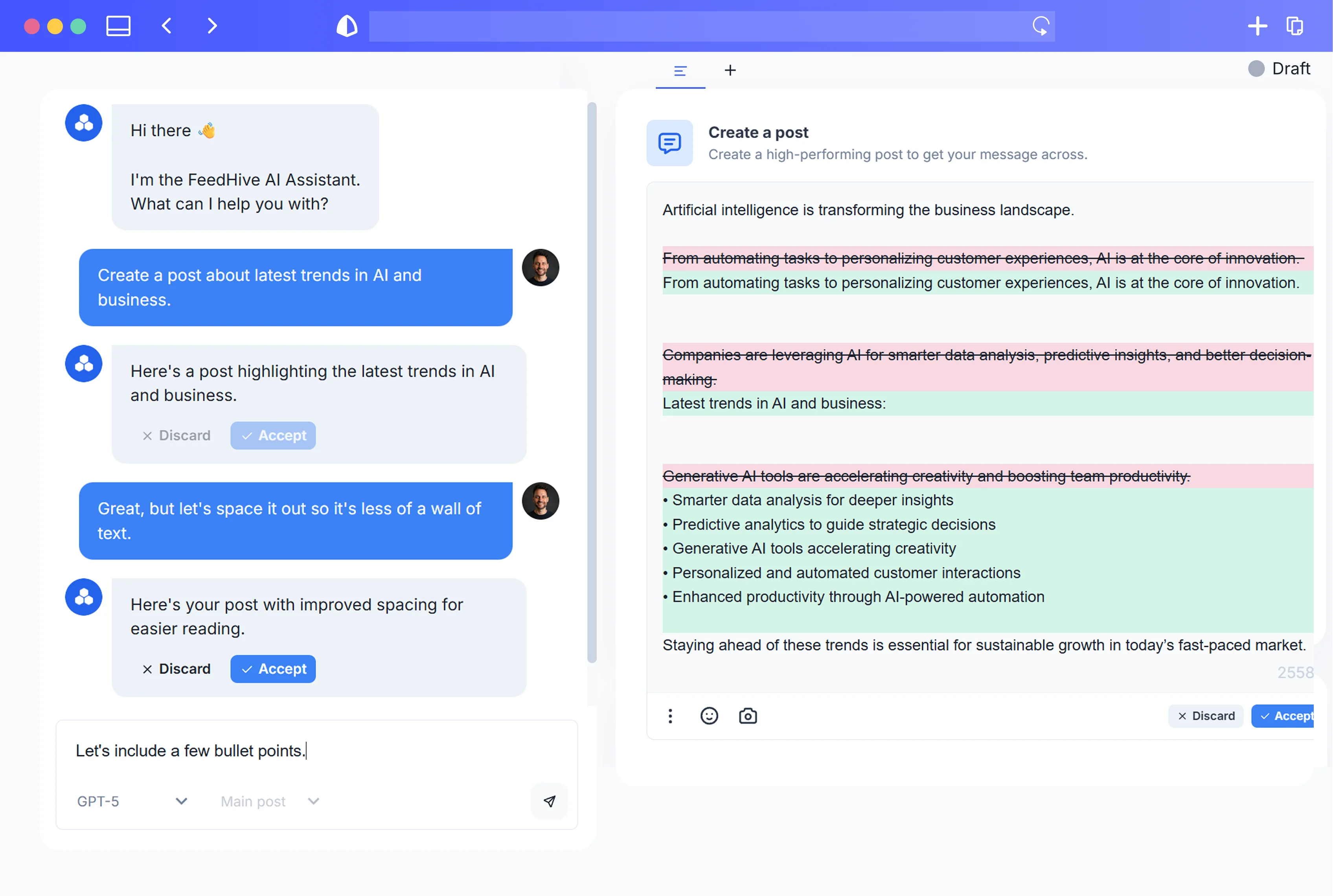


In today’s fast‑paced digital world, solopreneurs are challenged by the need to build a powerful social presence while managing every aspect of their business. With buyers increasingly relying on social media for discovery and trust‑building, it’s no longer a luxury to skip out on a consistent digital footprint. Leveraging AI not only helps generate creative ideas and streamline content production—it makes it realistic to run a full‑funnel strategy in as little as three hours a week.
Why Solopreneurs Need an AI‑First Social Workflow in 2025
Social media has rapidly evolved into an essential sales and engagement channel, with about 70% of small businesses in the U.S. using social platforms as a key part of their marketing mix (Clutch, 2019). The reality is that buyers use social channels to research brands and build trust, often relying on direct recommendations and authentic online interactions rather than polished advertising. For solopreneurs, establishing a personal brand is crucial because people trust people more than faceless companies. Nielsen’s studies have shown that nearly 90% of consumers prefer recommendations from individuals they know, underscoring the power of a founder‑led strategy.
Yet, the challenge for solo operators remains: how can you manage the myriad tasks—ideation, content creation, scheduling, and engaging with your audience—without succumbing to burnout? This is exactly where an AI-first social workflow shines, compressing what used to take hours or days into a focused, manageable routine.
Defining a ‘Full‑Funnel’ Social Strategy for a One‑Person Business
A full‑funnel social strategy covers every stage of a customer’s journey—from initial awareness and discovery to nurturing relationships and finally converting leads into clients. For solopreneurs, this means that even a small presence can echo across the funnel if executed smartly.
Key elements include:
- Top‑of‑Funnel (Awareness): AI tools can assist in generating multiple creative ideas, drafting captivating short‑form video scripts, and designing eye‑catching posts that capture attention.
- Mid‑funnel (Education): Convert longer form content—think blog posts, webinars, or podcasts—into succinct carousels or email sequences to nurture and educate your audience.
- Bottom‑of‑Funnel (Conversion): Employ AI to craft personalized DM templates, follow‑up messages, and offer‑focused content that addresses objections and directs prospects toward a purchase.
By leveraging a full‑funnel approach, you ensure that every post and interaction works strategically toward building trust, engaging your audience, and ultimately driving sales or client opportunities.
The 3‑Hour Weekly Blueprint: Overview of the Time‑Boxed Routine
Time is the most precious asset for any solo founder. Studies have consistently shown that context switching and ad‑hoc posting can reduce productivity by up to 40% (APA, 2001). Instead of scattering your social efforts throughout the week, batching them into a single, focused three‑hour session minimizes distractions and builds efficiency. This blueprint is designed to:
- Condense content ideation to analytics review into clearly defined blocks.
- Utilize AI for idea generation, drafting, and repurposing, so you’re not reinventing the wheel each time.
- Ensure consistency without requiring a full‑time social media manager.
By dedicating just three hours every week, you can maintain a robust online presence that aligns with your business goals.
Hour 1 – Ideation & Planning: Turning Business Goals Into Content Topics
Kick off your 3‑hour routine by aligning your business objectives with content themes. This phase is all about establishing focus areas:
- Define core business goals: Whether it’s growing brand awareness, driving website traffic, or generating leads, clarify what you want to achieve.
- Brainstorm content topics: Use AI to rapidly generate a list of potential topics. For instance, if one of your goals is to increase brand awareness, you might generate ideas around behind‑the‑scenes content, founder stories, or customer success narratives.
- Segment your themes by audience interests: Consider splitting your content between educational and personal branding topics to tap into both trust and conversion pathways.
By mapping your business goals directly to content topics, you ensure that every idea generated is purpose‑driven and designed to resonate with your target audience.
Hour 1 – AI‑Assisted Content Mapping: From Ideas to Formats and Funnels
After generating your list of topics, the next step is to determine the best format for each idea and how it fits into your sales funnel:
- Content formats: Decide whether your ideas are best served as short‑form videos, carousel posts, threads, or longer blog posts. Data from HubSpot indicates that short‑form videos are highly effective in delivering ROI but remember that a multi‑format approach can reach various audience segments.
- Mapping to the funnel: Assign each content piece a place in the funnel—whether it’s awareness (eye‑catching hooks), education (in-depth posts), or conversion (offer‑focused content).
- Using AI to streamline mapping: Tools like generative AI can quickly offer suggestions on the best formats and distribution channels for each idea, ensuring a cohesive strategy throughout your content calendar.
This phase is critical, as a well‑structured content map prevents last‑minute scrambling and ensures your social media output is strategically varied and focused on the buyer’s journey.
Hour 2 – Creation Sprint: Drafting, Repurposing, and Polishing With AI
With your content map in hand, jump into a high‑energy creation sprint. Here, AI can be your best friend:
- Drafting: Use AI to quickly produce initial drafts of your posts. This can include writing copy for social posts, scripting video ideas, and generating captions.
- Repurposing: Leverage AI to transform long‑form content into bite‑sized pieces. For instance, a blog post can be repackaged into a series of social media posts or a carousel, allowing you to maximize your content’s reach.
- Polishing: Once AI has provided a rough draft, take the time to add your personal voice and adjust the content to ensure authenticity. This is where you ensure that your style remains consistent and that your messaging sounds genuine.
By treating content creation like a sprint, you can harness the speed of AI and then refine the output, ensuring both efficiency and quality.
Hour 2 – Scheduling & Automation: Building a Week of Posts in One Sitting
After you’ve created a batch of content, it’s time to schedule and automate:
- Centralized scheduling: Tools like FeedHive can simplify the process by allowing you to queue posts across multiple platforms from one interface—saving you time and ensuring consistency.
- Batch scheduling: Set aside 5‑10 minutes per platform to review and adjust your scheduled posts, ensuring they’re set to go live at optimized times.
- Automation benefits: Not only does automation help maintain a consistent presence, but it also frees up mental space so you can focus on other strategic tasks throughout the week.
Scheduling in batches means you’re not constantly distracted by the need to post in real-time, allowing you to concentrate on broader content strategy without ad‑hoc interruptions.
Hour 3 – Engagement: Smart Commenting, DMs, and Community Nurture With AI Support
Engagement remains the human side of your strategy and is key to building trust and community:
- Smart commenting: Dedicate time to respond to comments and engage with followers. Use AI to draft replies quickly, then infuse your personal tone into each message.
- Direct messaging: Personalize outreach and follow‑up messages. AI can help generate email or DM templates that you can customize, ensuring prompt and thoughtful responses.
- Community nurture: Regular interaction—whether it’s commenting on posts in your network or engaging in group discussions—plays a pivotal role in strengthening relationships and boosting loyalty.
- Time‑boxed engagement: Aim for focused bursts of 10–15 minutes throughout the day (or consolidate into a dedicated window) to manage responses efficiently while keeping engagement genuine.
Even a few minutes of intentional interaction daily can have a significant impact on community sentiment and sales outcomes.
Hour 3 – Review & Optimization: Using Analytics to Refine Next Week’s Plan
Conclude your three‑hour block by reviewing analytics and refining your strategy:
- Performance review: Use analytics tools to track key metrics such as engagement rates, website traffic, and conversions. Data from Sprout Social and Hootsuite shows that social media is influential for generating loyalty and even repeat purchases.
- Identify top‑performing formats: Analyze which types of content are resonating most with your audience, and consider replicating successful formats while discarding less effective ones.
- Experimentation: Adopt a lean experimentation approach by testing one new hook style or variation each week. AI can assist here by quickly generating multiple options, lowering the cost of creative iteration.
- Iterate and adjust: Use these insights to adjust your content map for the following week, ensuring your strategy evolves based on what works best.
This review process not only confirms the value of your posts but also sets you up for continuous improvement by learning from every interaction.
Example Workflows for Different Solopreneur Types
Different solopreneurs have distinct needs. Here are a few tailored examples:
- Coaches: Use AI to transform client testimonials and coaching tips into inspiring social posts and story-driven videos.
- SaaS Founders: Convert product updates and case studies into multi‑format content that walks potential customers through key benefits and usage tips.
- Creators: Leverage behind‑the‑scenes footage and creative process highlights to build authenticity and deepen community engagement.
- Agencies: Repurpose client success stories into polished case studies and data‑driven posts that showcase expertise.
Each workflow relies on a streamlined three‑hour approach that harnesses AI to maximize output while maintaining a personal touch.
Templates & Checklists: Plug‑and‑Play Systems You Can Copy
Having plug‑and‑play templates and checklists is essential for maintaining consistency and efficiency:
- Idea generation checklist: Start with a template that prompts you to define goals, identify audience pain points, and generate topic ideas with AI support.
- Content mapping template: Outline key formats, the associated funnel stage, and a publishing schedule.
- Content creation checklist: Include steps for AI drafting, personalized polishing, repurposing ideas, and quality assurance.
- Analytics review checklist: Track metrics, note top‑performing themes, and document experiments to repeat or tweak.
These templates can be stored digitally and reused week after week, significantly shortening your preparation time while ensuring that no critical step is overlooked.
Common Pitfalls and How to Avoid ‘AI Spam’ While Staying Authentic
While AI is a fantastic tool, it’s vital to strike the right balance:
- Overreliance on AI: Remember that AI-generated content should serve as a starting point. Inject your personality to avoid sounding robotic.
- Inconsistent tone: Use checklists to ensure that every piece of content aligns with your brand voice. Review all AI drafts and adjust as needed.
- Flooding feeds: Avoid overposting or creating content solely for the sake of it. Focus on quality over quantity to prevent “AI spam” and maintain authentic engagement.
- Neglecting human interaction: Even the best AI won’t replace genuine human connection. Keep engagement personal by combining AI efficiency with your unique insights.
By being mindful of these pitfalls, you can ensure that your social media remains engaging and authentic, resonating deeply with your audience.
Scaling Up: When and How to Go Beyond 3 Hours Without Losing Your Life
Once you’ve mastered a three‑hour weekly routine, you might find opportunities to scale:
- Automate repetitive tasks further: Continue exploring advanced social scheduling and analytics platforms that embed AI features.
- Outsource selectively: If your workload begins to exceed your available time, consider outsourcing non‑core tasks while maintaining creative control.
- Incremental growth: Add small daily engagements or experiment with an additional content format. The key is to avoid burnout by integrating scaling efforts into a well‑defined schedule.
- Monitor your capacity: Use time‑tracking tools and regular reviews to ensure that any added work complements rather than disrupts your primary strategy.
Scaling should always be measured—ensuring that increased output drives growth without draining your energy or diluting your personal brand.
Conclusion: Turning a 3‑Hour Routine Into Consistent Growth and Revenue
In a landscape where social media is critical for trust, discovery, and conversions, a smart, AI‑powered workflow can transform the way solopreneurs grow their businesses. By consolidating content ideation, creation, scheduling, engagement, and review into a focused three‑hour weekly block, you not only overcome the notorious challenges of time and burnout but also establish a consistent, authentic presence across the funnel. Whether you’re a coach, SaaS founder, creator, or agency owner, this time‑boxed system—with a little help from AI and strategic tools like FeedHive—ensures that every minute spent online translates directly into tangible business results.
Embrace these strategies, tweak them to fit your unique style, and watch as your social presence drives sustained growth and revenue, all without sacrificing your life outside of work.