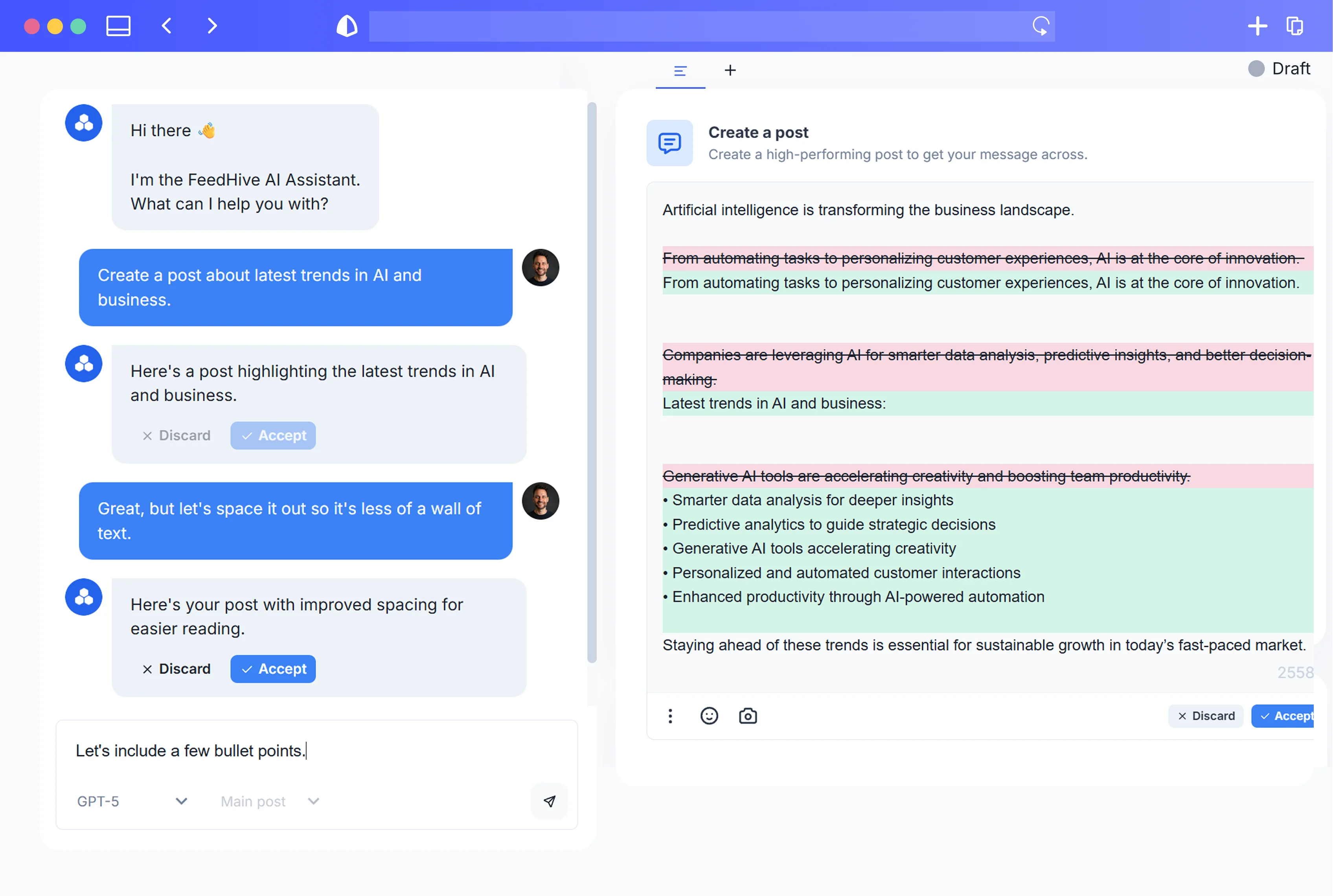


You've tried AI for social media. The results? Generic. Bland. Sounds like every other brand out there.
"Excited to announce..." "We're thrilled to share..." "Don't miss out on..."
Yawn.
Here's the thing: AI can absolutely nail your brand voice. But most people use it wrong. They treat AI like a vending machine—press a button, get content. No wonder it sounds like everyone else's.
In this guide, you'll learn how to train AI to write content that sounds like you—not some corporate robot.
Why AI Content Sounds Generic (And How to Fix It)
The problem isn't AI. It's the inputs.
When you type "write me a LinkedIn post about productivity," you're giving AI nothing to work with. No personality. No context. No voice. So it defaults to safe, forgettable content.
The fix? Give AI the building blocks of your brand voice before asking it to write anything.
Step 1: Define Your Brand Voice (For Real This Time)
Most "brand voice guidelines" are useless. "Professional but friendly" tells AI nothing.
Instead, define your voice with specifics:
Tone markers:
- Do you use humor? What kind? (Dry? Self-deprecating? Absurd?)
- How formal are you? (Contractions? Slang? Industry jargon?)
- What emotions do you evoke? (Excitement? Calm authority? Rebellious energy?)
Writing quirks:
- Short punchy sentences? Or flowing paragraphs?
- Questions to engage? Or statements of fact?
- Emojis? How many? Which ones?
Things you never say:
- Banned words and phrases
- Topics you avoid
- Clichés that make you cringe
Here's an example for a fitness brand:
"We're irreverent and a little sweary. We use short sentences. Lots of questions. We never say 'fitness journey' or 'transform your body.' We joke about skipping leg day. We're the friend who actually shows up to spot you."
That's a voice AI can work with.
Step 2: Feed AI Your Best Content
AI learns from examples. Give it your greatest hits.
Pull 10-15 pieces of content that perfectly capture your voice:
- Your most-engaged social posts
- Email newsletters that got replies
- Blog posts people actually shared
- Even voice memos or podcast transcripts
Don't just hand these over blindly. Tell AI what to look for:
"Analyze these posts for tone, sentence structure, word choice, and personality. Identify patterns in how I open posts, how I structure arguments, and how I use humor."
Now AI has a model of your actual voice—not a generic approximation.
Step 3: Create a Brand Voice Prompt Template
Here's where the magic happens. Build a reusable prompt that bakes your voice into every request:
You are writing social media content for [Brand Name].

Voice characteristics:
- [Your tone markers]
- [Your writing quirks]
- [Words/phrases to avoid]

Reference these examples of our voice:
[Paste 2-3 examples]

Now write a [post type] about [topic].
Save this. Use it every time. Your AI content will instantly sound more like you.
Step 4: Use AI as a Starting Point, Not the Finish Line
Even with perfect prompts, AI won't nail it 100% of the time. That's fine.
Use AI to:
- Generate first drafts
- Brainstorm angles you hadn't considered
- Rewrite content in different formats
- Punch up boring sentences
Then edit. Add your personal takes. Insert that joke only you would make. Reference that thing your audience always talks about.
The goal isn't to replace your voice—it's to amplify it.
Step 5: Build a Feedback Loop
AI gets better when you tell it what's working.
After each post:
- Note what you changed and why
- Track which AI-assisted posts perform best
- Update your prompt template with new learnings
Over time, you'll refine the process until AI feels like an extension of your brain—not a foreign translator.
The Shortcut: Tools That Do This For You
Setting all this up manually works, but it's tedious.
Modern AI writing tools like FeedHive have built-in brand voice features that learn your style automatically. You feed it examples, set your preferences, and it generates content that actually matches your voice—without the prompt engineering gymnastics.
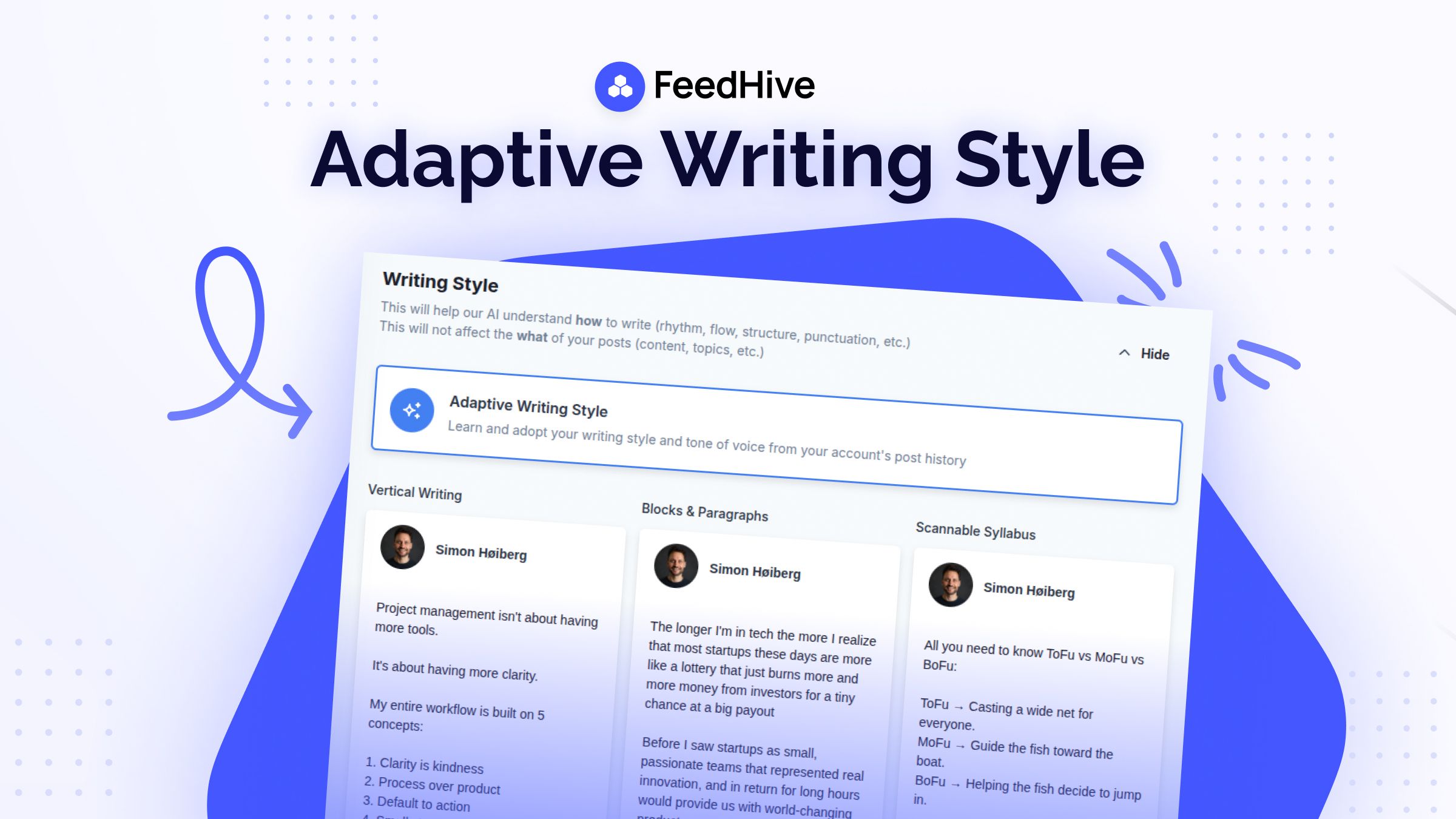
The key features to look for:
- Brand voice training: Upload samples and let AI learn your patterns
- Fine-tuned models: AI specifically trained for social media (not generic text)
- Style consistency: Keeps your voice consistent across platforms and post types
The Bottom Line
AI content doesn't have to sound like AI content.
The secret is treating AI as a collaborator, not a content vending machine. Define your voice clearly. Feed it great examples. Build repeatable systems. Edit with intention.
Do this right, and you'll create more content in less time—content that actually sounds like you wrote it.
Because you did. You just had help.